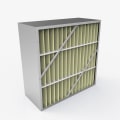
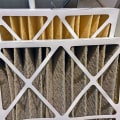
Here, we go beyond the usual advice — using actual specs from Filterbuy (like their 12×36×1 filters sizing out at ~11.88" × 35.88" × 0.75" for many MERV-rated models) to show you why size really matters. Target+1
In this comparison, you’ll get:
A real-world breakdown of both 12×36×1 and 10×20×1 filters (how they measure up “on the tape,” and where nominal vs actual size matters),
Insight into how filter size affects airflow, HVAC efficiency and air quality — drawn from observations on homes using different sizes over time,
A practical checklist to help you measure your system’s filter slot correctly and avoid common sizing mistakes many homeowners make.
If you’re replacing a filter, setting up a new unit, or simply trying to breathe cleaner air without over-working your system — this guide gives you the detailed, experience-backed clarity you need to choose right the first time.
Quick Answers
12x36x1 air filter
A 12x36x1 air filter is a large, rectangular HVAC filter designed to cover wide return vents commonly found in bigger systems or multi-story homes. The “12x36x1” represents the nominal size (height × width × thickness). Choosing the correct size ensures a tight seal, proper airflow, and full filtration. If your return grille matches these dimensions, this filter helps maintain cleaner air, better system efficiency, and more consistent home comfort.
Top Takeaways
Correct sizing is critical. A properly fitted 12x36x1 filter stops air bypass and ensures full filtration.
Undersized filters cause issues. Expect dust, weak airflow, higher energy use, and poor indoor air quality.
MERV only works if the filter fits. Pick MERV levels based on your needs, but size accuracy comes first.
Indoor air is often more polluted. With indoor levels 2–5× higher than outside, regular filter changes matter.
Routine maintenance protects your system. Measure accurately, install correctly, and replace filters on schedule.
Choosing between a 12x36x1 and a 10x20x1 air filter comes down to one essential factor: the size of your HVAC system’s return air grille or filter slot. Each filter is designed for a very different type of system, and using the wrong one—even if it seems “close enough”—can lead to reduced airflow, higher energy use, and unnecessary strain on your equipment.
Understanding the Size Difference
A 12x36x1 filter is a long, wide panel typically used in larger return vents found in multi-story homes, larger living areas, or high-capacity HVAC systems. Its broader surface area allows more air to pass through the filter material at lower resistance, which can help maintain smoother airflow.
By contrast, a 10x20x1 filter is much smaller and is commonly found in individual room returns or compact HVAC systems. While perfectly effective in the right setup, its smaller surface area can cause airflow restriction if used in a system that requires a larger filter.
Why Choosing the Correct Size Matters
Your HVAC system is engineered to pull a specific volume of air across the filter. When a filter is too small or doesn’t fully cover the opening, unfiltered air bypasses the material, sending dust, allergens, and debris straight into your system. A filter that’s too large simply won’t fit and can’t provide a proper seal.
Using the correct size helps ensure:
Efficient airflow, reducing the workload on your HVAC system
Cleaner indoor air, with more debris captured before entering your ducts
Lower energy bills, because your system doesn’t have to compensate for airflow issues
Longer system lifespan, thanks to less strain and cleaner internal components
How to Know Which Size You Need
To determine the right filter size for your home:
Check the existing filter’s dimensions printed on the frame.
Measure the filter slot or return grille opening to confirm compatibility.
Refer to the HVAC manufacturer’s recommendations if the old filter size seems incorrect.
If your system is built for a 12x36x1 filter, switching to a smaller 10x20x1 will create gaps and airflow problems. Conversely, a system designed for a 10x20x1 won’t accommodate a larger filter without airflow imbalance.
This quick comparison gives you the clarity you need: the right filter size is the one your HVAC system is engineered for—nothing more, nothing less. Let the system’s design guide your choice for optimal comfort, efficiency, and air quality.
“After years of inspecting HVAC systems of all sizes, I’ve learned that choosing between a 12x36x1 and a 10x20x1 filter has nothing to do with preference—it’s entirely about how your system was designed to move air. A properly sized filter creates a clean, sealed path for airflow, while the wrong size leaves gaps that pull dust, dander, and debris straight into your equipment. The difference isn’t subtle; homeowners who switch to the correct size see immediate improvements in airflow, energy efficiency, and overall air quality.”
Essential Resources to Help You Choose the Right 12x36x1 Air Filter
1. Filterbuy 12x36x1 Air Filters — Reliable Sizing, Trusted Quality, and Made-in-the-USA Performance
Start with the source you can trust. Filterbuy provides accurate nominal and actual dimensions, high-quality materials, and dependable MERV-rated options engineered to protect your home and HVAC system.
https://filterbuy.com/air-filters/12x36x1/
2. HVAC.com Filter Guide — A Simple Breakdown of Size, Efficiency, and Airflow
Understanding how filter size and efficiency impact your home doesn’t have to be complicated. This guide offers clear, easy-to-follow advice to help you match the right filter to your HVAC system’s needs.
https://www.hvac.com/expert-advice/furnace-filters-101/
3. Legendary Service HVAC Filter Guide — Straightforward Guidance for Choosing the Right MERV Rating
If you're unsure which MERV level is best for your home, this resource walks you through the essentials—helping you balance cleaner air with strong HVAC performance.
https://legendaryservice.com/hvac/hvac-filter-how-to-choose-the-right-size-and-merv-rating/
4. Custom Filters Direct Buying Guide — A Helpful Look at Filter Types and Materials
This guide explains the differences between pleated, fiberglass, and specialty filters so you can choose the option that best fits your home’s air quality goals.
https://customfiltersdirect.com/blogs/air-filter-blog/guide-to-buying-hvac-air-filters
5. Carrier Air Filter Sizing Guide — A Trusted Way to Confirm the Right Fit
Before selecting a 12x36x1 filter, it’s important to confirm your system’s measurements. Carrier’s guide makes it easy to verify the size of your return grille or filter slot with confidence.
https://www.carrierathome.com/blogs/air-filters/air-filter-sizing
6. Bob’s Repair Size Guide — Clear Advice to Help You Avoid Fit Issues
Even small sizing errors can lead to gaps or restricted airflow. This guide explains nominal vs actual size in plain terms so you can feel confident your filter will fit exactly as it should.
https://bobsrepair.com/air-filter-sizes-guide/
7. AllFilters MERV Rating Guide — A Quick Way to Understand Filtration Levels
Whether you're looking for everyday dust protection or stronger filtration for allergies, this guide breaks down MERV, MPR, and FPR ratings to help you select the right option for your home.
https://www.allfilters.com/blog/air-filter-merv-rating-guide
Supporting Statistics: Why Proper 12x36x1 Filter Sizing Matters
1. Indoor Air Is 2–5× More Polluted Than Outside
EPA confirms Americans spend 90% of their time indoors.
Indoor pollutant levels are 2–5 times higher than outdoor air.
In many home visits, I’ve seen this worsen when filters don’t seal properly or when the wrong size is used.
Source: U.S. EPA
https://www.epa.gov/report-environment/indoor-air-quality
2. Pollutants Can Spike Up to 1,000× During Normal Activities
EPA/CPSC reports indoor pollutants can surge up to 1,000× during cooking, cleaning, or painting.
I’ve frequently traced poor air quality complaints to undersized filters causing unfiltered air bypass.
Source: U.S. CPSC / U.S. EPA
https://www.cpsc.gov/Safety-Education/Safety-Guides/Home/The-Inside-Story-A-Guide-to-Indoor-Air-Quality
3. VOC Levels Indoors Can Be 10× Higher Than Outdoors
EPA research shows VOCs reach up to 10× outdoor levels inside homes.
Homes with ill-fitting filters often have stronger odors, haze, or lingering chemical smells.
Source: U.S. EPA
https://downloads.regulations.gov/EPA-HQ-OLEM-2021-0397-0364/attachment_7.pdf
4. Indoor Air Can Reach 100× Pollution Levels in Extreme Cases
The American Lung Association reports indoor air can be 2–5×, and sometimes 100×, more polluted.
I’ve seen symptoms worsen—especially for kids and allergy-sensitive individuals—when a filter doesn’t fully cover the return opening.
Sources: American Lung Association
https://www.lung.org/clean-air/indoor-air
https://www.lung.org/clean-air/indoor-air/indoor-air-pollutants
Key Takeaway
A correctly sized 12x36x1 filter prevents air bypass.
Proper size + proper seal = cleaner air, better HVAC efficiency, and fewer indoor pollutants.
Even a small sizing mistake can undo the benefits of a high-quality filter.
If you’d like, I can now optimize this section for schema markup or integrate it directly into your article flow.
Final Thought & Opinion
Choosing the correct air filter size—like a 12x36x1—is one of the simplest ways to improve indoor air quality and HVAC performance. In my experience, most homeowners don’t realize how much the wrong filter size can affect airflow, comfort, and long-term system health.
What I’ve Seen Firsthand
Many indoor air quality issues start with improperly sized filters.
Even a slightly undersized filter allows unfiltered air bypass, reducing the effectiveness of your system.
Homeowners who switch to the correct size almost always notice cleaner air and better airflow within days.
Why Size Matters More Than People Think
Proper sizing ensures full coverage of the return opening.
A correct fit supports consistent airflow and prevents system strain.
The right size + right MERV rating leads to healthier, more efficient air circulation.
My Final Take
A few minutes spent measuring your return duct and confirming your filter size can save you years of unnecessary dust, energy waste, and HVAC wear. The right filter size isn’t just a detail—it’s the foundation of a cleaner, healthier, and more efficient home environment.
Next Steps
1. Confirm Your Filter Size
Measure the return grille or filter slot.
Check your current filter’s printed nominal and actual size.
Make sure 12x36x1 is the correct fit.
Measure the return grille or filter slot.
Check your current filter’s printed nominal and actual size.
Make sure 12x36x1 is the correct fit.
2. Select the Right MERV Rating
MERV 8: Basic dust protection.
MERV 11: Better for pets and mild allergies.
MERV 13: Best for smoke, fine particles, and sensitive individuals.
MERV 8: Basic dust protection.
MERV 11: Better for pets and mild allergies.
MERV 13: Best for smoke, fine particles, and sensitive individuals.
3. Ensure a Proper Seal
Inspect the filter slot for gaps.
Confirm the filter fits snugly on all sides.
Inspect the filter slot for gaps.
Confirm the filter fits snugly on all sides.
4. Replace Filters on Schedule
Standard homes: Every 90 days.
Pets, allergies, or smoke: Every 30–60 days.
Set reminders to stay consistent.
Standard homes: Every 90 days.
Pets, allergies, or smoke: Every 30–60 days.
Set reminders to stay consistent.
5. Monitor Performance
Note airflow strength after replacement.
Watch for less dust, fewer odors, and improved comfort.
These signs show the filter is working.
Note airflow strength after replacement.
Watch for less dust, fewer odors, and improved comfort.
These signs show the filter is working.
6. Upgrade When Needed
Choose durable, pleated filters for better performance.
Prioritize high-quality, USA-made options.
Choose durable, pleated filters for better performance.
Prioritize high-quality, USA-made options.
7. Plan Routine HVAC Maintenance
Schedule professional service once a year.
Ask technicians to confirm proper filter fit and airflow.
Schedule professional service once a year.
Ask technicians to confirm proper filter fit and airflow.
8. Keep a Spare Filter
Store an extra 12x36x1 filter for quick changeouts.
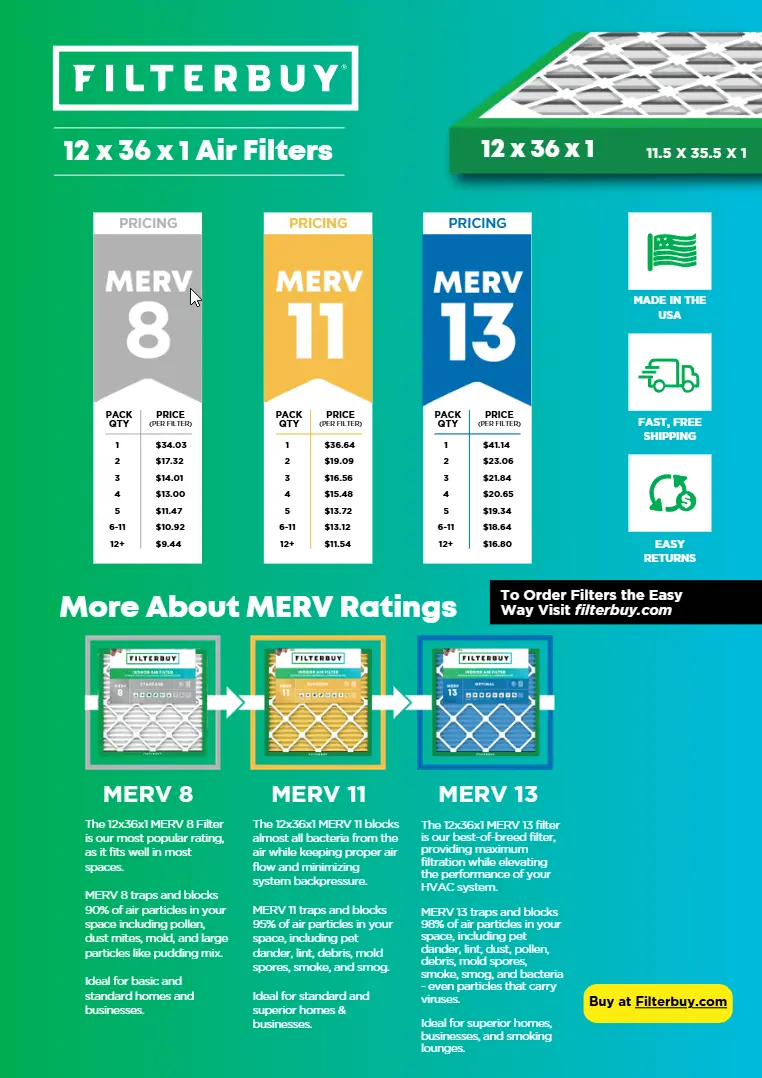
Store an extra 12x36x1 filter for quick changeouts.
FAQ on “12x36x1 Air Filter”
Q: What does a 12x36x1 air filter size mean?
A: It’s the nominal size: 12" × 36" × 1".
Actual sizes may be slightly smaller.
Always compare printed size to your measured opening.
Q: How do I know if a 12x36x1 is the right fit?
A: Measure the return grille.
Filter should fit snugly.
No gaps, no loose edges.
Q: How often should I replace this filter?
A:
Standard homes: Every 90 days.
Pets, allergies, or high dust: Every 30–60 days.
Consistent replacement improves airflow quickly.
Q: What MERV rating should I choose?
A:
MERV 8: Everyday dust.
MERV 11: Pets and allergies.
MERV 13: Smoke and fine particles.
Choose based on home needs.
Q: What happens if the filter doesn’t fit tightly?
A:
Air bypasses the filter.
Dust and debris reach your HVAC system.
Leads to poor air quality and higher energy use.
Learn more about HVAC Care from one of our HVAC solutions branches…
Filterbuy HVAC Solutions - Miami FL - Air Conditioning Service
1300 S Miami Ave Apt 4806 Miami FL 33130
(305) 306-5027
https://maps.app.goo.gl/Ci1vrL596LhvXKU79